3ie’s multi-year evaluation of one of the world’s largest poverty-alleviation programs, i.e. India’s Deendayal Antyodaya Yojana-National Rural Livelihoods Mission (DAY-NRLM), has generated rich evidence on how self-help groups and their federations are reshaping women’s economic opportunities in rural India. It is also one of our largest studies—covering more than 25,000 households across nine states. We have shared insights on data collection, institutional systems and the evolving role of community resource persons (such as here and here). In this blog, we highlight an aspect of women’s lives that is largely underreported— changing diets and approach to food hygiene. It offers a quiet yet meaningful dimension to the changing nature of conversations about women’s empowerment in parts of rural India.
The changing ways in which women think about food—how it is prepared, handled, and consumed—offer a powerful lens into evolving household nutrition practices. These shifts are not marginal to the story of nutrition; they sit at its very centre. They remind us that progress is not always reflected in measurable inputs or outputs, but also visible in the unseen transformations in how women think and make decisions to live healthier lives. These behaviours may not immediately affect statistical results, yet they shape health and well-being over time in ways quantitative indicators sometimes fail to explain.
As part of our qualitative fieldwork under 3ie’s NRLM study in 2025, our team spent time in SHGs across different villages of Jhadol block of Udaipur district in Rajasthan. The reflections and quotations that follow are rooted in those conversations and observations.
Household and food hygiene: changing attitude
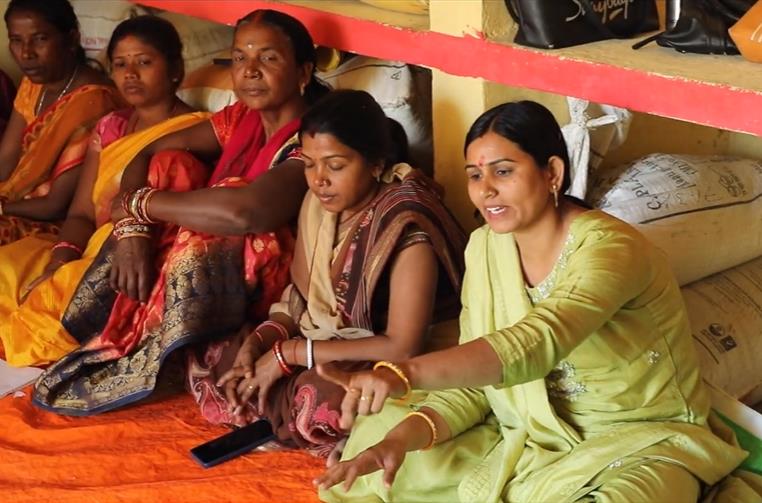
During a focus group discussion (FGD) with self-help group (SHG) women, a participant shared:

Earlier, we didn’t even wash the utensils properly… but after joining the SHG and receiving the FNHW (Food, Nutrition, Health and WASH) training, we now keep not just the utensils but the whole house clean..
What appears, at first, to be a simple remark reveals a deeper shift beneath the surface. Our conversations with women in Rajasthan suggest a shift from irregular utensil cleaning to a more consistent emphasis on household and food hygiene. Cleanliness—of utensils, kitchens, and surroundings—has evolved from being an occasional chore to a part of daily routine. Importantly, women increasingly associate these practices with choices directly linked to health and well-being and less as a matter of social expectations.
Dietary switch: prioritizing warm meals
Another woman in Udaipur expressed:
Earlier, we used to fall sick after eating stale food, but now we eat freshly cooked meals.
Women's food preferences and everyday choices are governed by how they understand their own health. While our 2019 impact evaluation of NRLM showed only modest improvements in dietary diversity, our recent interactions in Rajasthan suggest more noticeable changes in what women choose to eat and how they think about their own nourishment. Dietary habits among women have undergone substantial changes, with a noticeable shift towards freshly cooked meals, greater aversion to stale food and more regular meal timings.
Not long ago, leftover or previously cooked food was commonly consumed, often less from choice than from limited awareness around spoilage, nutrition, and health risks. Today, the insistence on freshly prepared food and the understanding that stale or cold food can lead to illness are linked to a growing awareness about nutrition and good health, beyond mere food diversity, indicating the importance given to nutrition-related behaviours. This everyday decision though seemingly small, carry real significance for maternal and child nutrition outcomes, as nutrient absorption, food safety, and meal regularity directly affect women’s health – especially during pregnancy.
What indices often miss
Nutrition and health indices may sometimes fail to fully capture subtle yet meaningful nutrition-related behavioural changes. Measures of sanitation access, WASH indicators and dietary diversity are critical. And yet, at times, miss key insights into behavioural shifts within households. For example, when women in Rajasthan speak of cleaning utensils daily or insisting on freshly cooked meals, they are describing more than improved hygiene or food choices. They are pointing to a deeper transition in how health, care, and responsibility are understood and acted upon.
Field conversations suggest that indicators related to food freshness, meal regularity, and everyday hygiene practices around cooking and storage may add an important layer to how nutrition and health are measured—one that existing indicators only partially illuminate.
Social learning through SHGs
Women often traced their evolving practices to interactions during SHG meetings—learning from peers, seeing demonstrations from cadres, and observing changes in one another’s homes. CRPs, especially the Food, Nutrition, Health and WASH CRPs, who are mostly local women, have emerged as pillars in reshaping ideas of cleanliness, health, and nutrition. Their credibility stems from shared experiences gained through intra-state and inter-state visits, as well as their community-rootedness. This kind of embedded learning is gradual. It spreads through shared experiences rather than formal instruction alone. The SHG space provides a social environment where women observe one another adopting new practices and gradually incorporating them into their own routines.
Looking beyond metrics
Evaluating behaviour change requires understanding the social, cognitive, and contextual factors that influence how people adopt and sustain new practices, dimensions that standard indices often overlook (World Bank). While food hygiene and dietary diversity are foundational to better health, they are among the most challenging indicators to measure accurately through large-scale quantitative surveys. Indicators on dietary diversity, food hygiene and sanitation offer valuable quantitative insights, but they often fail to capture the full story of the transition on the ground.
What we observed in these visits reminds us that change begins quietly—in daily choices that reflect growing awareness, confidence, and care that go beyond what any survey metric can reveal. This underscores the need to look a step further beyond metrics and invest in programs that strengthen social learning, peer-to-peer influence, and women’s agency within SHGs.
With inputs from Bidisha Barooah, Siddhanth Aney, and Tanvi.
Comments

Abhinav, you have identified and documented the truth and feels like SHG program is moving towards right directions. People may call it slow but I feel that organizations are slow to showcase the achievements of rural Bharat. I think if there is some more in-depth research happen then we may see that its not only women health but child care would also have been improved with the WASH program.
Congratulations to you and team for bringing a beautiful piece highlighting achievement of Grameen Bharat and Matru-Shakti.
Thanks





Thank you so much for your encouraging words. I agree, these changes may seem slow but reflect meaningful shifts on the ground that may go unnoticed sometimes. Your point on improvements in child care through WASH is very relevant and worth exploring further.