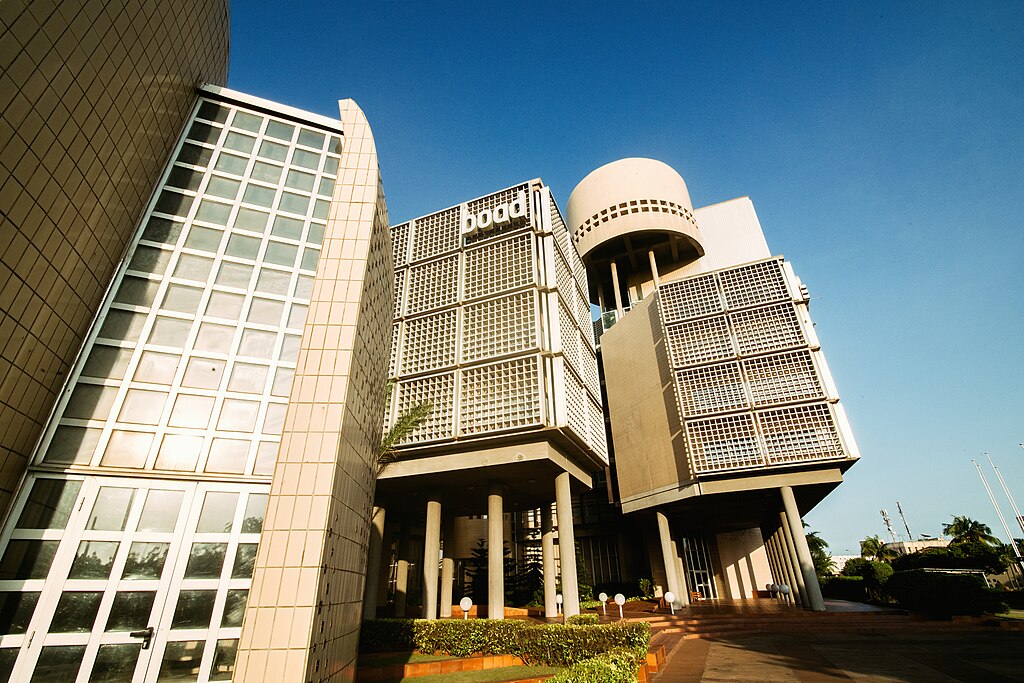
Governments face increasingly complex challenges: food insecurity, climate shocks, rising demands for accountability, and more. To make sound decisions, they need reliable answers to questions of what works, for whom, where, and at what cost. For more than a decade, our partnership with the West African Development Bank (BOAD) has provided policymakers in West Africa with answers, showing why lasting collaborations are essential for transforming systems and delivering meaningful impact. This relationship has both contributed to the global evidence base and ensured that findings led to policy changes, which improved programs and removed inefficiencies for the future.
Over a decade of shared learning and impact
Since joining 3ie’s membership program in 2013, BOAD has played an influential role in guiding 3ie’s strategy and supporting the growth of evidence-informed policymaking in West Africa. In turn, 3ie accompanied BOAD as a learning partner through program evaluations, strengthening systems, and piloting innovative tools. The strong BOAD-3ie engagement was pivotal to the creation of the West Africa Capacity-Building and Impact Evaluation (WACIE) Program, a cornerstone of this partnership and a regional hub for evidence. The program, built with additional support from the Hewlett Foundation and the WAEMU Commission, highlights how flexible and long-term commitments are necessary to create sustainable change.
Based in Benin, a BOAD member state, WACIE now serves as a one-stop shop for evidence for policymakers, researchers, and practitioners across Francophone Africa.
Through this collaboration, 3ie and BOAD:
- Conducted rigorous evaluations of major hydro-agricultural investments in Côte d’Ivoire and Senegal and assessed major regional programs like the Emergency Program for Electrification and the Special Food Security Program;
- Introduced new innovations using evaluations employing satellite imagery and remote sensing to measure the effects of large-scale programs such as an agricultural project in Niger;
- Built visibility and connections for evaluators and policymakers in the region with joint international panels such as NECS, trainings with directors of evaluation in Cote d’Ivoire, and events like Geo4Impact;
- Collaborated on rapid evidence brokering from the WACIE Helpdesk to guide internal BOAD discussions on issues such as agricultural technology adoption, electricity access, and school infrastructure investments.
These engagements were not conducted as singular, independent activities, but rather as part of a continuous collaboration. This work to strengthen BOAD’s culture of evidence use would not have been possible without a long-term, consistent partnership.
Lessons from long-term engagement
The BOAD–3ie experience highlights three essential lessons for development partners:
First, building trust takes time. Once individuals and institutions trust each other, they are able to open up about challenges and opportunities, supporting deeper learning and better outcomes.
Second, capacity grows through continuity, not short-term training sessions. Ongoing relationships between key people and operating units mean that projects can build on each other, rather than starting at zero each time.
Third, innovation emerges from stability that allows institutions the freedom to test new methods and technologies as opportunities arrive, slowly building together towards adopting new approaches.
Long-term engagement is a prerequisite for sustainable progress. In the evolving development environment, a greater emphasis on government-led and domestically-designed programs requires resilient institutions that can withstand changing politics and funding sources to effectively deliver programs. Flexible support from funders, such as the support for WACIE from the Hewlett Foundation, is equally crucial to creating this space.
The BOAD–3ie partnership demonstrates what is possible when organizations move beyond short project cycles and commit to learning and innovating together over many years: evidence-informed investments, stronger systems, and better programs.
Over the past thirteen years, BOAD and 3ie have built a foundation for more transparent, effective, and adaptive policymaking across West Africa. If we want resilient, equitable, and impactful policies, we must champion partnerships that endure, evolve, and deliver together.