Subscribe

Home Page Secondary Menu

  • Blogs
  • Events
  • Jobs
  • Media
  • Newsletter
  • Resources
  • Donate
3ie

Home Page Primary Menu

  • About
    • Team
    • Supporters
    • Members
    • At a glance
    • Research Commissioning Centre
    • Governance
    • Partners
    • Institutional policies and reports
    • Contact us
  • Services
  • Research
  • Evidence Hub
    • Development Evidence Portal
    • Evidence gap maps
    • Evidence impact summaries
    • Impact Stories Dashboard
    • Journal of Development Effectiveness
    • Publications
    • Replication studies
  • Impact

Home Page Primary Menu

  • About
    • Team
    • Supporters
    • Members
    • At a glance
    • Research Commissioning Centre
    • Governance
    • Partners
    • Institutional policies and reports
    • Contact us
  • Services
  • Research
  • Evidence Hub
    • Development Evidence Portal
    • Evidence gap maps
    • Evidence impact summaries
    • Impact Stories Dashboard
    • Journal of Development Effectiveness
    • Publications
    • Replication studies
  • Impact

Home Page Secondary Menu

  • Blogs
  • Events
  • Jobs
  • Media
  • Newsletter
  • Resources
  • Donate

Breadcrumb

  1. Home
  2. Evidence hub
  3. Publications
  4. Systematic review summaries
  5. what factors affect sustained adoption safe
  • Publications
  • Briefs
    • Evidence gap map
    • Evidence use
    • Impact evaluation
    • Learning summary
    • Programme overview
    • Systematic review
    • Replication studies
    • Working paper
    • Other briefs
  • Evidence gap maps
  • Impact evaluations
  • Replication papers
  • Scoping papers
  • Systematic reviews
  • Systematic review summaries
  • Working papers
  • Other evaluations
Systematic review summaries
What factors affect sustained adoption of safe water, hygiene and sanitation technologies?

What factors affect sustained adoption of safe water, hygiene and sanitation technologies?

3ie Systematic Review Summary 2

Kristyna Hulland, Nina Martin, Robert Dreibelbis, Julia DeBruicker Valliant and Peter Winch

  • Article
  • Related Content

Safe water, sanitation and hygiene (WASH) behaviours, such as treating drinking water, washing hands at key times or using a latrine rather than defecating in open spaces, are cornerstones of building strong, healthy communities and reducing mortality due to diarrhoea and other preventable diseases. Many studies have shown the health benefits of WASH, and factors that affect initial adoption of short-term WASH use. Few have assessed the determinants of long-term, sustained WASH practice.

Drawing on a full systematic review, this systematic review summary by Kristyna Hulland,Nina Martin, Robert Dreibelbis, Julia DeBruicker Valliant and Peter Winch reviews the evidence on factors that motivate sustained adoption of WASH technologies.

This report by Hulland et al. is a summary of the full systematic review and is designed to be useful to policymakers and practitioners. The full review and all of its appendices are available through the EPPI-Centre website.

Systematic Review findings

  • The authors found that individual psychosocial factors, such as perceived benefit and self-efficacy, as well as interpersonal factors like social norms, strongly affect continued WASH behaviours. 
  • Age and gender were strong determinants of continued WASH practice, particularly in latrine use and handwashing practice. 
  • An individual’s broader context was also found to be highly influential. 
  • Cost and durability were the two most important factors related to technology. 
  • Influential programme factors associated with sustainability include frequent, personal contact with a health promoter and sustained accountability. Personal follow-up in conjunction with other measures like mass media advertisements or group meetings may further increase sustained adoption.

Implications for research and, policy and practice

  • More emphasis needs to be placed on defining sustainability and translating these definitions into metrics and programme elements that can be used to implement, evaluate and further the discussion on sustained WASH adoption
  • Programmes and technologies need to be designed to be supportive and flexible to motivators of both initial and long-term WASH practice. 
  • Funding mechanisms need to emphasise the importance of routine monitoring and evaluation, and be willing to invest in longer-term behaviour maintenance. 
  • Policies and regulations need to be established at the governmental and intergovernmental levels that support the right to safe water, hygiene and improved sanitation for all people globally.
SRS11 SRH

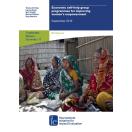
Economic self-help group programmes for improving women’s empowerment

Systematic review summary 3ie 2019  
This report summarises a systematic review by Brody and colleagues on the impacts of women’s economic self-help groups on their political, economic, social and psychological empowerment.

SRS10

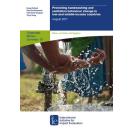
Promoting handwashing and sanitation behaviour change in low-and middle-income countries

Systematic review summary 3ie 2017  
This report summarises a systematic review that examines which promotional approaches are effective in changing handwashing and sanitation behaviour and which implementation factors affect the success or failure of such interventions.

Identification and measurement of health-related spillovers in impact evaluations

Identification and measurement of health-related spillovers in impact evaluations

Systematic review summary 3ie 2016  
This systematic review summary by Benjamin-Chung and colleagues tries to identify mechanisms that trigger spillover through geographic or social proximity, learning or imitation, norm-shaping, income and substitute effects, general equilibrium effects and relative deprivation.

Community-based rehabilitation for people with disabilities

Community-based rehabilitation for people with disabilities

Systematic review summary 3ie 2016  
This report by Lemmi and colleagues is based on a systematic review that looked at the impact of community-based rehabilitation (CBR) on health, education, livelihoods, social inclusion and empowerment.

Supplementary feeding for improving the health of disadvantaged infants and children: what works and why?

Supplementary feeding for improving the health of disadvantaged infants and children: what works and why?

Systematic review summary 3ie 2016  
This report – a summary of a systematic review and a realist review – by Kristjansson et al. examines the evidence on whether supplementary feeding can improve the health of infants and children between three months and five years of age.

    Tools

  • View summary
    EN |
  • Download summary
    EN |
  • Print Page
  • Share this page
     
  • DOI : 10.23846/srs002

About Footer

  • About

Services Footer

  • Services

Our work

  • Research

Evidence hub

  • Evidence Hub

Donate

  • Donate
 

Copyright © 2025 International Initiative for Impact Evaluation (3ie)| All rights reserved | Terms of use | Privacy policy | Accessibility statement