
International Development Coordinating Group
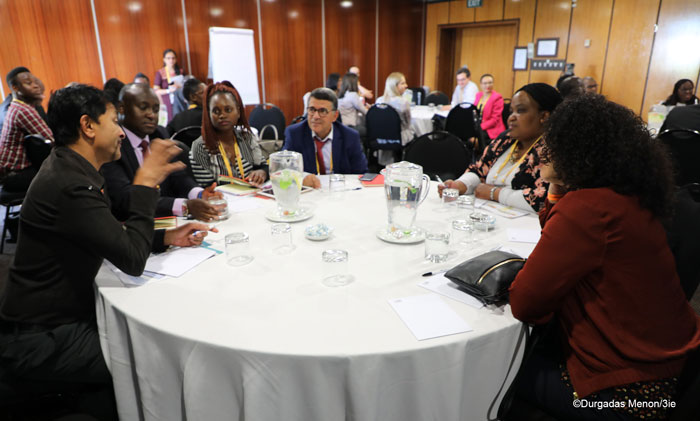 The International Development Coordinating Group (IDCG) is a multidisciplinary network of researchers, policymakers, practitioners, and funders committed to evidence-informed policies. Part of the Campbell Collaboration, IDCG focuses on systematic reviews relevant to, and addressing the needs of low- and middle-income countries (L&MICs), with 3ie providing technical expertise and editorial support to authors.
Co-chair: Marie Gaarder, Executive Director, 3ie
IDCG’s objectives
- Support the production and dissemination of high-quality systematic reviews in international development
- Foster collaboration by developing and cultivating a diverse international network of individuals who contribute to and promote the production of systematic reviews
- Develop the capacity of authors and policymakers to conduct and use systematic reviews, especially those based in L&MICs
- Engage evidence users such as policymakers and promote the work of the group
- Provide a platform for dissemination through journal publication
Why support synthesis?
Over the last decade, there has been an increase in the demand for evidence to inform international development policy, programming and practice. Donors, implementing agencies and L&MIC governments are under pressure to demonstrate that their policies are informed by evidence. Systematic reviews summarize the best available evidence on a specific question by synthesizing the results of several studies. This matters most in L&MICs, where the evidence base for development interventions is often thinnest and the decisions it informs affect a large number of people.
What IDCG does
The group provides technical expertise and editorial services to Campbell Collaboration review authors. It has supported several reviews, protocols and titles, which are available in the research evidence section of Campbell’s website. The group has also developed and published a number of resources for authors, contributed to a special issue of the Journal of Development Effectiveness and organized panels and workshops at various events. The secretariat also engages with a number of agencies, including World Bank, AusAID and UK-AID, in overseeing the preparation of a range of reviews. Read more about the group here. You can also find us on Facebook and X.
How can 3ie help you?
3ie will provide editorial services for systematic reviews. 3ie will manage the editorial process for draft titles, protocols and reviews in liaison with the IDCG co-chairs and review teams.
How to register with IDCG
There are three stages in the production of a Campbell review, or a Campbell evidence gap map (EGM): (1) title registration, (2) protocol, and (3) review or EGM.
The first step is to complete the title registration form (TRF). The proposed title for your systematic review or EGM should clearly state the scope of the review. This scope should be determined in consultation with key stakeholders, including intended end users.
The editorial process for your review or EGM will be managed by one of Campbell’s Coordinating Groups. The population, intervention, control, and outcomes (PICO) framework is used to guide Campbell TRFs. If your review question is not intervention-focused, please modify that section of the TRF accordingly to fit your question.
Submit your TRF here. If you do not have a ScholarOne account, click on the link ‘Create an Account’. In case of queries, please write to Tamara Lotfi at development(at)campbellcollaboration(dot)org.
More information about Campbell policies and guidelines is available under Author Guidelines.
To find out more about submitting a proposal, click here.
Co-Chairs
- Marie Gaarder, Executive Director, 3ie
- [Vacant]
Methods Editors
- Emily Hennessy, Department of Psychological Sciences, University of Connecticut
Supervising Editors
- Birte Snilstveit, Director Synthesis & Reviews, 3ie, UK
Information Specialists
- Kirsten Elliott, Imperial College London, UK
- Heather MacDonald, Carleton University, Ottawa, Canada
- Mark Engelbert, Senior Evaluation Specialist and Lead, Development Evidence Portal, 3ie, UK
Managing Editors
- Tamara Lotfi, Senior Evaluation Specialist, 3ie
- IDCG Editorial Assistant: Diana Belén Córdova-Aráuz, Research Assistant, 3ie
- Elizabeth Ghogomu (Nutrition and Food security topics), Bruyère Research Institute, University of Ottawa, Canada
IDCG covers the following topics
Nutrition and Food security
- Elizabeth Kristjansson, Full Professor, School of Psychology, University of Ottawa, Canada
- Annette O'Connor, Professor of Epidemiology, College of Veterinary Medicine, Michigan State University, USA
- Damian Francis, Associate Professor and Director, Center for Health & Social Issues, Georgia College & State University, USA
- Fahad Siddiqui, Assistant Professor, Duke-NUS Medical School, Singapore
- Fiona Wallace, Nutrition Scientist and Independent Consultant, Canada
- Thomas de Hoop, Managing Economist, American Institutes for Research (AIR), USA
- Mark Engelbert, Senior Evaluation Specialist and Lead, Development Evidence Portal, 3ie, UK
- Shari Krishnaratne, Research Fellow, London School of Hygiene & Tropical Medicine, UK
- Elizabeth Ghogomu, Senior Research Associate, Bruyère Research Institute, University of Ottawa, Canada
Education
- Jen Stevenson, Senior Research Fellow, 3ie, UK
- Maren Duvendack, Professor of Evaluation in Economics, School of Global Development, University of East Anglia, UK
- Shannon Shisler, Lead Evaluation Specialist, 3ie
- Daniel Phillips, Research Manager, Education Endowment Foundation, UK
- Laurenz Mahlanza-Langer, Executive Director, Pan-African Collective for Evidence (PACE), South Africa
- Thomas de Hoop, Managing Economist, American Institutes for Research (AIR), USA
Agriculture
- Maren Duvendack, Professor of Evaluation in Economics, School of Global Development, University of East Anglia, UK
- Laurenz Mahlanza-Langer, Executive Director, Pan-African Collective for Evidence (PACE), South Africa
- Thomas de Hoop, Managing Economist, American Institutes for Research (AIR), USA
- Mark Engelbert, Senior Evaluation Specialist and Lead, Development Evidence Portal, 3ie, UK
Women's empowerment & Gender
- Laurenz Mahlanza-Langer, Executive Director, Pan-African Collective for Evidence (PACE), South Africa
- Maren Duvendack, Professor of Evaluation in Economics, School of Global Development, University of East Anglia, UK
- Tamara Lotfi, Senior Evaluation Specialist, 3ie
- Thomas de Hoop, Managing Economist, American Institutes for Research (AIR), USA
Climate change/Environment
- Jen Stevenson, Senior Research Fellow, 3ie, UK
- Laurenz Mahlanza-Langer, Executive Director, Pan-African Collective for Evidence (PACE), South Africa
Humanitarian settings
- Thomas de Hoop, Managing Economist, American Institutes for Research (AIR), USA
Social protection
- Maren Duvendack, Professor of Evaluation in Economics, School of Global Development, University of East Anglia, UK
- Thomas de Hoop, Managing Economist, American Institutes for Research (AIR), USA
- Mark Engelbert, Senior Evaluation Specialist and Lead, Development Evidence Portal, 3ie, UK
Fragile and conflict-affected states
Finance
- Maren Duvendack, Professor of Evaluation in Economics, School of Global Development, University of East Anglia, UK
- Thomas de Hoop, Managing Economist, American Institutes for Research (AIR), USA
Health
- Maren Duvendack, Professor of Evaluation in Economics, School of Global Development, University of East Anglia, UK
- Tamara Lotfi, Senior Evaluation Specialist, 3ie
- Mark Engelbert, Senior Evaluation Specialist and Lead, Development Evidence Portal, 3ie, UK
- Jennifer Petkovic, Affiliate Investigator, Bruyère Health Research Institute, Canada
Employment
- Maren Duvendack, Professor of Evaluation in Economics, School of Global Development, University of East Anglia, UK
Governance
- Maren Duvendack, Professor of Evaluation in Economics, School of Global Development, University of East Anglia, UK
Transport
- Maren Duvendack, Professor of Evaluation in Economics, School of Global Development, University of East Anglia, UK