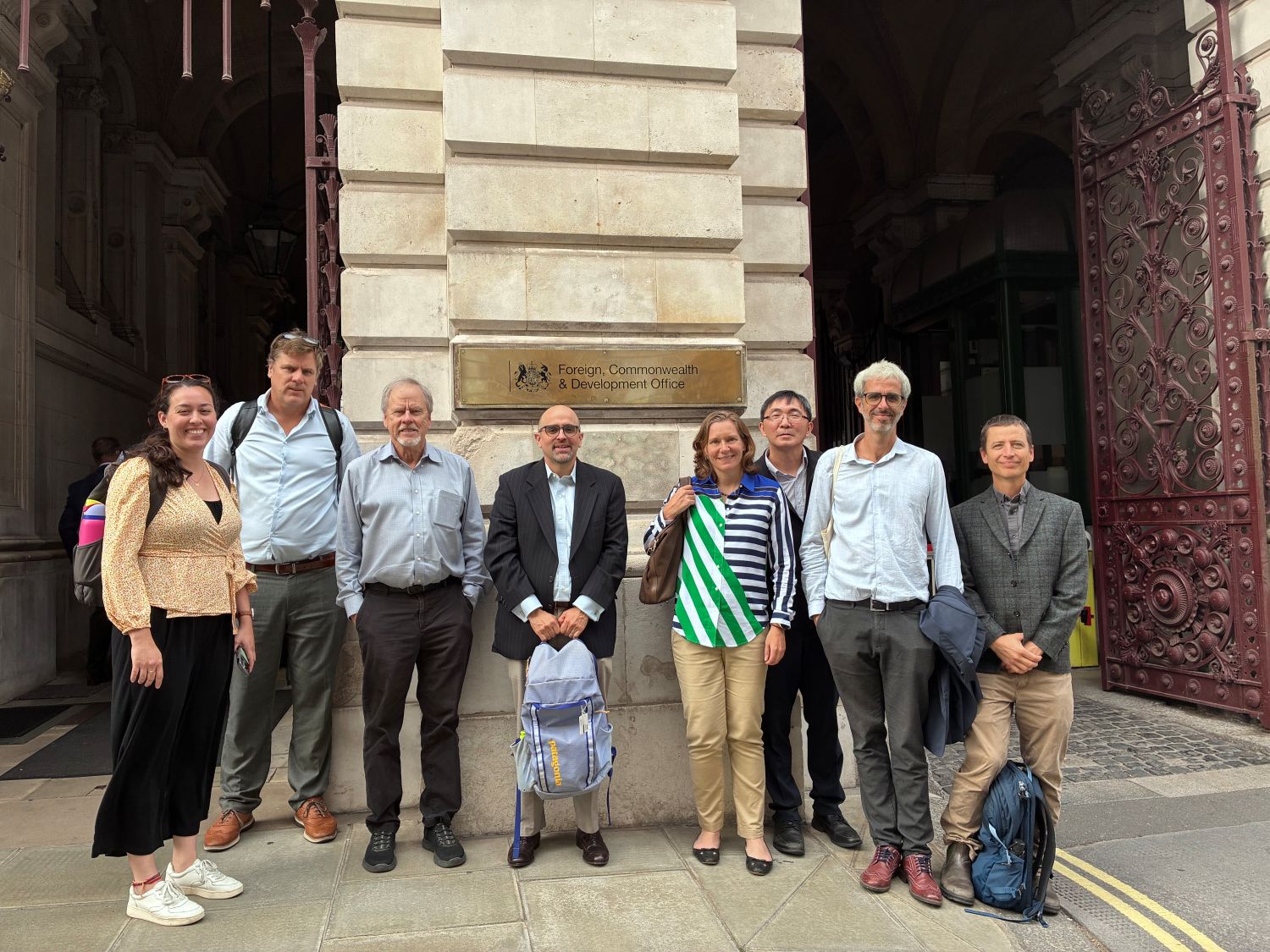
Esteban J. Quiñones, Senior Evaluation Specialist at 3ie, presented the findings from five multi-year impact evaluations under 3ie’s Agricultural Insurance Evidence Program in London in September 2026 to the program’s funders – Gates Foundation and the UK Foreign, Commonwealth and Development Office (FCDO). Agricultural insurance can reach far more small-scale farmers when products remove the barriers that keep them out. But the central finding was that enrolment alone does not improve their wellbeing.
Across India, Kenya and Senegal, digital tools and subsidies raised enrolment sharply. Satellite credit scoring lifted insurance uptake from 28% to 90% in Odisha,in eastern India, and settling claims from farmers’ own crop photos raised enrolment by 54 percentage points in Haryana, in western India. The clearest benefit came through credit, as insurance stood in for collateral for farmers without land titles.
The evaluations are also clear about what did not work. Price, trust and not knowing they were covered held back demand more than product understanding did. And the evaluations detected no effects on wellbeing, largely because the shocks insurance covers rarely occurred, and payouts came late or not at all.
Explore the Agricultural Insurance Evidence Program: briefs, reports and evaluations
On 29 September, Quiñones joined the convening “Can Better Weather Forecasting Make Insurance Work for Small-Scale Farmers?”, which brought together insurers, forecasters, funders and researchers. Much of the discussion looked beyond the results to what comes next.
It covered three questions:
- how product quality, visible coverage and reliable payouts can come before enrolment targets;
- how future studies can separate the effects of credit from insurance and measure outcomes in bad years; and
- where advances in forecasting, AI and Earth observation could reduce basis risk and trigger support before a shock hits.
A narrative synthesis of all five evaluations will follow.
Read the key summary LinkedIn post