
Subscribe

Home Page Secondary Menu

  • Blogs
  • Careers
  • Events
  • Media
  • Newsletter
  • Resources
  • Donate
3ie
  • About us

    About us

    We are a mission-driven non-profit organization dedicated to using evidence to transform people’s lives. We collaborate with governments, foundations, NGOs, development and research organizations across the globe.

    Explore About us
    • Team
    • Supporters
    • Members
    • At a glance
    • Governance
    • Partners
    • Institutional policies and reports
    • Contact us
  • What we offer

    What we offer

    We support governments and development partners to generate and use rigorous evidence that informs better policies, programs and investments. Our work spans the full decision-making cycle, helping identify what works, why it works, and how to improve outcomes.

    Explore What we offer
    • Theory of change development
    • Impact evaluation
    • Evidence Synthesis
    • Evidence gap maps
    • Impact evaluations scoping and design
    • Training Initiatives
    • Research grants administration
    • Transparency, research and ethics helpdesk
  • Our work

    Our work

    Our diverse evidence to policy portfolio spans all major development sectors and regions and represents the scale and depth of 3ie’s global programs and initiatives.

    Explore Our work
    • Education
    • Peacebuilding
    • Nutrition and Food Security
    • Gender and women’s empowerment
    • Mitigating and adapting to climate change
    • Innovations in data for impact evaluation
    • Research Commissioning Centre
    • WACIE
    • Rural India Livelihoods Project
    • Replication
  • Evidence Hub

    Evidence Hub

    We make high-quality development evidence publicly accessible through key databases, journals and repositories, which include studies produced by 3ie and beyond.

    Explore Evidence Hub
    • Development Evidence Portal
    • Evidence gap maps
    • Evidence impact summaries
    • Impact Stories Dashboard
    • Journal of Development Effectiveness
    • Publications

Impact

  • Impact
  • About us

    About us

    We are a mission-driven non-profit organization dedicated to using evidence to transform people’s lives. We collaborate with governments, foundations, NGOs, development and research organizations across the globe.

    Explore About us
    • Team
    • Supporters
    • Members
    • At a glance
    • Governance
    • Partners
    • Institutional policies and reports
    • Contact us
  • What we offer

    What we offer

    We support governments and development partners to generate and use rigorous evidence that informs better policies, programs and investments. Our work spans the full decision-making cycle, helping identify what works, why it works, and how to improve outcomes.

    Explore What we offer
    • Theory of change development
    • Impact evaluation
    • Evidence Synthesis
    • Evidence gap maps
    • Impact evaluations scoping and design
    • Training Initiatives
    • Research grants administration
    • Transparency, research and ethics helpdesk
  • Our work

    Our work

    Our diverse evidence to policy portfolio spans all major development sectors and regions and represents the scale and depth of 3ie’s global programs and initiatives.

    Explore Our work
    • Education
    • Peacebuilding
    • Nutrition and Food Security
    • Gender and women’s empowerment
    • Mitigating and adapting to climate change
    • Innovations in data for impact evaluation
    • Research Commissioning Centre
    • WACIE
    • Rural India Livelihoods Project
    • Replication
  • Evidence Hub

    Evidence Hub

    We make high-quality development evidence publicly accessible through key databases, journals and repositories, which include studies produced by 3ie and beyond.

    Explore Evidence Hub
    • Development Evidence Portal
    • Evidence gap maps
    • Evidence impact summaries
    • Impact Stories Dashboard
    • Journal of Development Effectiveness
    • Publications

Impact

  • Impact

Home Page Secondary Menu

  • Blogs
  • Careers
  • Events
  • Media
  • Newsletter
  • Resources
  • Donate

Breadcrumb

  1. Home
  2. Evidence hub
  3. Evidence impact summaries
  4. Influencing the design of the World Bank’s smallholder farmer irrigation...

Influencing the design of the World Bank’s smallholder farmer irrigation project in Rwanda


About 3ie evidence impact summaries

Read how 3ie verifies and classifies evidence impact

Highlights

Evidence impact

  • The 3ie-supported evaluation informed the design of the Sustainable Agricultural Intensification and Food Security Project, the World Bank’s new lending project in Rwanda. The results formed an integral part of the discussions of setting up the new project.

Factors that contributed to impact

  • Early involvement and extensive engagement by researchers with key decision makers resulted in evidence uptake of the study recommendations.
  • The results of the evaluation were released in time for the World Bank to consider the evidence and recommendations of the study in designing its project.

Impact evaluation details

Title: Impacts, maintenance and sustainability of irrigation in Rwanda
Authors: Esdras Byiringiro, Maria Jones, Florence Kondylis, John Loeser, Jeremy Magruder, Christophe Ndahimana
Status : Completed December 2019
Influencing the design of the World Bank’s smallholder farmer irrigation project in Rwanda

Context

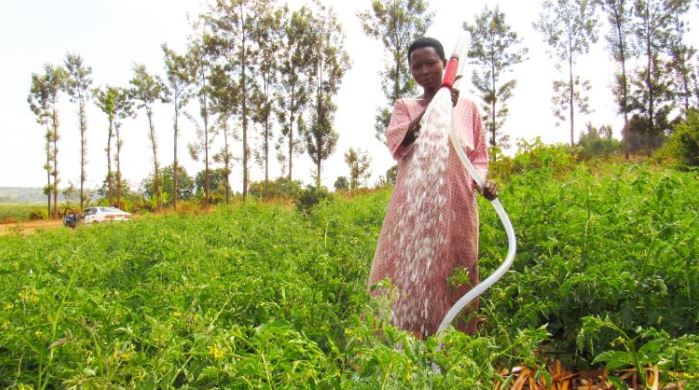
To address the challenge of food security, commercial agriculture has been encouraged in many developing countries. In Rwanda, most of the smallholders were rain-dependent and cultivated seasonal crops for consumption at home. The absence of irrigation resulted in low yields, which were neither commercially viable nor an extra source of income.

To overcome this challenge and promote economic growth, Rwanda's Ministry of Agriculture and Animal Resources launched its flagship programme: Land Husbandry, Water Harvesting and Hillside Irrigation (LWH), a sustainable land husbandry initiative for hillside agriculture. The aim of the project was to improve irrigation investments to facilitate economic development opportunities for smallholder farmers by improving yields and reducing risk during periods of droughts. The ministry had planned to invest in 9,392 hectares during 2014–2017 and further expand it to 15,300 hectares during 2017–2020.

In 2017, 3ie collaborated with the Ministry of Agriculture and Animal Resources, the World Bank’s Development Impact Evaluation and the University of California, Berkeley to study the impacts and sustainability of LWH in Rwanda. Four LWH schemes spanning five districts of Rwanda were part of the study, and 427 households participated in the study.

Evidence

The study findings demonstrated that hillside irrigation increased smallholder yields and cash profits by 70 per cent. Dry season yields were 90 per cent higher for plots in the treatment areas as compared to plots in control areas. Further, the study suggested that famers who received access to irrigation were more likely to grow horticulture crops. A finding highlighted by the study was on labour market failures being a key constraint limiting the irrigation of commercial crops. Many smallholders rely on their own labour and cannot afford to hire labourers once they adopt commercial farming.

Evidence impacts

Type of impact: Inform the design of other programs

Where findings from the evaluation or review inform the design of a program(s) other than the one(s) evaluated.

This is one of 3ie’s seven types of evidence use. Impact types are based on what we find in the monitoring data for an evaluation or review. Due to the nature of evidence-informed decision-making and action, 3ie looks for verifiable contributions that our evidence makes, not attribution.

Read our complete evidence impact typology and verification approach here.

Close window

Lessons learnt inform the World Bank’s project in Rwanda

Significant positive findings from the impact evaluation informed the design of the Sustainable Agricultural Intensification and Food Security Project, the World Bank’s new lending project in Rwanda. The project acknowledged the challenge identified in the study that, under large-scale irrigation, the positive impacts are restricted to a subset of commercial farmers, with smallholders less likely to benefit. The project thus proposed to support and scale up Rwanda's Small-Scale Irrigation Technology Development Programme, which benefits small farmers who irrigate small pieces of land capable of producing good yields during the drought period. 

Suggested citation

International Initiative for Impact Evaluation (3ie), 2020. Influencing the design of the World Bank’s smallholder farmer irrigation project in Rwanda [online summary], Evidence Impact Summaries. New Delhi: 3ie.

Evidence impact summaries aim to demonstrate and encourage the use of evidence to inform programming and policymaking. These reflect the information available to 3ie at the time of posting. Since several factors influence policymaking, the summaries highlight contributions of evidence rather than endorsing a policy or decision or claiming that it can be attributed solely to evidence. If you have any suggestions or updates to improve this summary, please write to influence@3ieimpact.org

Last updated on 13th November 2020
Print this page Download this page Share this page  

About Footer

  • About

Services Footer

  • What we offer

Our work

  • Our work

Evidence hub

  • Evidence Hub

Donate

  • Donate
 

Copyright © 2026 International Initiative for Impact Evaluation (3ie)| All rights reserved | Terms of use | Privacy policy | Accessibility statement